
close
Choose Your Site
Global
Social Media

Views: 0 Author: Site Editor Publish Time: 2025-10-15 Origin: Site
Choosing the right airless paint sprayer for your painting projects is essential for achieving smooth, professional-quality finishes while maximizing efficiency. Whether you're a professional contractor, DIY enthusiast, or someone looking to tackle a home improvement project, the right sprayer can make all the difference in your work. Airless paint sprayers have become an indispensable tool in modern painting because of their ability to provide fast, even coverage with minimal overspray.
However, with a wide range of models available on the market, selecting the right airless paint sprayer can be overwhelming. The wrong choice can result in wasted time, money, and effort. This guide will walk you through the key factors to consider when choosing an airless paint sprayer, helping you make an informed decision and achieve the best results for your projects.
Before diving into the selection process, it's essential to understand how an airless paint sprayer works and why it's beneficial for different types of projects. Unlike traditional sprayers that use compressed air to spray paint, an airless paint sprayer operates by pumping paint through a high-pressure hose to a spray nozzle. The pressure, typically ranging from 1,000 to 3,000 psi, forces the paint into a fine mist, creating an even, smooth coat.
The main benefits of using an airless paint sprayer include:
Fast application: Airless sprayers can cover large areas quickly, allowing you to finish projects in less time compared to using rollers or brushes.
Even coverage: The high pressure ensures a smooth, consistent finish without streaks or roller marks.
Versatility: Airless sprayers can handle a wide range of materials, including paints, stains, primers, and even thicker coatings like elastomeric or textured paints.
Minimal overspray: Unlike traditional sprayers that can create a lot of overspray, airless sprayers offer better control, minimizing waste.
Now that you have a basic understanding of how airless paint sprayers work, let’s look at the factors you need to consider when choosing the right one for your specific needs.
The first factor to consider when choosing an airless paint sprayer is the size and scope of your project. Different models are suited to different types of work, and selecting the wrong sprayer for your project can lead to inefficiency and subpar results.
If you’re planning to paint a small room, a fence, or furniture, you don't need a heavy-duty sprayer. In this case, a compact airless paint sprayer with a lower psi rating (around 1,000 to 2,000 psi) will be sufficient. These sprayers are typically lighter, easier to handle, and designed for smaller volumes of paint.
For medium to large-sized painting tasks, such as painting a house exterior, large rooms, or a commercial space, you’ll need a more powerful sprayer with higher psi (2,000 to 3,000 psi) and a higher flow rate. These models are capable of handling larger volumes of paint and can cover more surface area in less time.
If you’re working in industrial or commercial settings where you need to apply thick coatings, such as textured paints, primers, or industrial-grade finishes, you’ll need a high-capacity, heavy-duty airless paint sprayer. These sprayers can handle high-viscosity coatings and are typically equipped with larger motors and pumps to deliver consistent performance.
The flow rate of an airless paint sprayer determines how much paint the sprayer can deliver per minute. For larger projects, you’ll want a sprayer with a higher flow rate. For example:
Low Flow Rate: A flow rate of around 0.1 to 0.2 gallons per minute (GPM) is sufficient for smaller projects and thinner materials like stains or latex paints.
Medium Flow Rate: For medium-sized projects, look for sprayers with 0.3 to 0.5 GPM. These sprayers work well with most paints and provide an ideal balance of speed and efficiency.
High Flow Rate: For heavy-duty industrial applications or very large projects, opt for a sprayer with 0.6 GPM or higher. These sprayers can handle thicker paints and larger areas.
The capacity of the sprayer’s paint container is another consideration. Some sprayers come with small, portable tanks, while others have larger, stationary tanks for continuous operation. For larger projects, a larger capacity tank will help reduce the number of refills needed during operation.
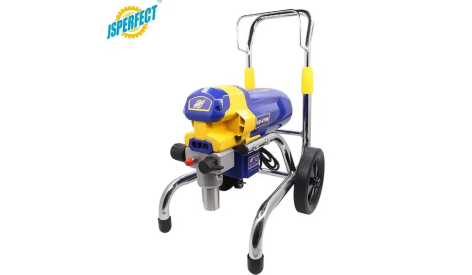
One of the key advantages of airless paint sprayers is the ability to adjust the spray pressure and spray pattern. This feature gives you control over how the paint is applied, allowing you to achieve different finishes depending on the project.
Low Pressure: Ideal for applying thin coatings or achieving a fine finish.
High Pressure: Best for thicker coatings, rough surfaces, or fast application over large areas.
Most modern sprayers come with adjustable spray nozzles that allow you to change the width and pattern of the spray, depending on whether you’re working on a narrow trim or a wide wall. Choosing a sprayer with variable pressure control and adjustable nozzles will ensure that you can adapt the tool to different tasks.
Another important factor is the ease of use of the airless paint sprayer. Since painting can be physically demanding, especially for large projects, the weight, handle design, and overall ergonomics of the sprayer are essential considerations.
Lightweight Models: For smaller, DIY projects, a lightweight, compact sprayer will reduce strain and make it easier to maneuver.
Comfortable Handles: Look for models that feature ergonomic handles with comfortable grips, especially if you will be using the sprayer for extended periods.
For professionals or contractors, sprayers with pneumatic or hydraulic systems may provide additional ease of use, as they reduce the physical effort required to operate the sprayer.
When choosing an airless paint sprayer, it’s essential to consider the durability and build quality of the machine. Industrial-grade sprayers are built to withstand heavy use and last for years, while lower-end models may wear out more quickly if used frequently.
Look for a sprayer made from high-quality materials such as stainless steel, which can resist rust and corrosion, especially when used in damp environments. Additionally, check if the machine comes with a warranty and whether spare parts are readily available in case of maintenance or repairs.
Regular maintenance and cleaning are essential for the longevity and optimal performance of your airless paint sprayer. Some sprayers are easier to clean than others, so consider the cleaning process when making your decision.
Many airless paint sprayers come with self-cleaning systems that help flush out paint and prevent clogging. However, it's still important to clean the machine thoroughly after each use to avoid paint build-up and ensure smooth operation for future projects. Detachable parts and easy-to-clean hoses can make maintenance much simpler.
While not a primary consideration for many, noise and vibration levels can affect the comfort and work environment, especially for contractors who are working long hours. Some airless sprayers can be noisy, and excessive vibration can make the sprayer difficult to control.
Look for sprayers that are designed to reduce noise and vibration, as this can enhance the comfort of your work and reduce fatigue.
Price is always an important consideration, but it’s essential to balance cost with performance. While high-quality airless paint sprayers can be an investment, the value they provide in terms of efficiency, finish quality, and durability makes them worthwhile in the long run.
Consider your budget and weigh it against the features, capacity, and durability of the sprayer. For occasional DIYers, a mid-range model may suffice, while professional painters or those tackling larger projects will benefit from investing in a higher-end model that offers more features and greater longevity.
Choosing the right airless paint sprayer for your project can significantly improve your efficiency and the quality of your work. By considering factors such as the size and scope of your project, flow rate, pressure adjustment, ease of use, durability, and price, you can find the sprayer that best suits your needs.
Whether you are a professional contractor working on large-scale commercial projects or a DIYer tackling home improvements, selecting the right airless sprayer will help you achieve smooth, consistent finishes with less time and effort. Always opt for a sprayer that offers the features and performance you need, while balancing cost and long-term durability.
For high-quality airless paint sprayers that combine innovation, performance, and reliability, Jsperfect offers a range of products tailored to meet the needs of both professionals and DIY enthusiasts. Their commitment to quality ensures that you'll find the perfect sprayer to take your painting projects to the next level.


