close
Choose Your Site
Global
Social Media

Views: 0 Author: Site Editor Publish Time: 2026-06-04 Origin: Site
Accurate spatial measurement is never just a simple field task. It stands as a critical variable in project profitability. It directly influences material waste reduction. It also dictates overall labor hours. You need precise data to keep budgets intact. Poor measurements lead to ruined materials. Ruined materials destroy your profit margins quickly.
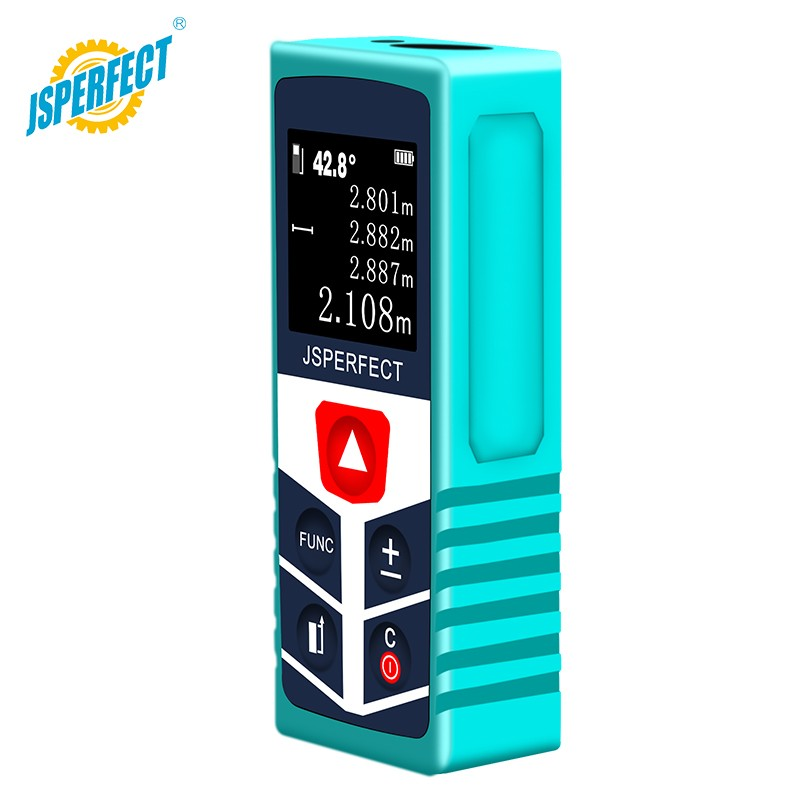
Traditionally, contractors and estimators relied heavily on the standard measuring tape. This tool feels comfortable in every toolbelt. However, physical tapes introduce hidden costs into your workflow. As projects grow in complexity, these traditional tools reveal their physical limits. We now see the Laser Distance Meter emerging as a modern mechanism. It scales efficiency rapidly across job sites. It excels particularly in complex or large-scale environments.
We must move away from a rigid zero-sum mindset. Optimizing efficiency requires a nuanced approach. You must understand exactly where physical tapes reach their limits. We will show you where laser technology delivers verifiable returns. They provide faster speed, elevated safety, and seamless data integration.
Table of Contents
Workflow Symbiosis: Tape measures remain optimal for short-range, tactile material cutting; laser distance meters dominate long-range, obstacle-heavy, and high-volume spatial assessments.
Efficiency Multiplier: Laser tools convert two-person measurement tasks into single-operator workflows, drastically reducing labor costs on site.
Data Integrity:Modern laser devices reduce human transcription error by digitizing measurements directly into CAD or estimating software.
Environmental Constraints: Evaluate laser tools with realistic expectations regarding bright sunlight visibility and minimum distance thresholds.
Manual measurement hides massive operational costs. Many teams overlook these everyday expenses entirely. You often need two people just to measure a large commercial room. One person holds the dumb end of the tape. The other pulls the reel across the floor. Over long distances, physical tapes inevitably sag. They bend around corners and over debris. This sagging creates skewed, inaccurate numbers. Operators also write these numbers on scrap paper. This manual process introduces frequent transcription errors. A misread number ruins a fabrication order.
We must define what professional efficiency actually means. Success criteria go beyond simply acquiring a number quickly. True efficiency involves several critical, interconnected factors:
Speed of data acquisition across large spaces.
Repeatability of the gathered spatial data.
Operator safety during complex measurement tasks.
Seamless data transfer into digital platforms.
We establish early trustworthiness by stating a clear reality. A Laser Distance Meter does not eliminate your toolbelt tape measure. You still need physical tapes for sub-3-foot tasks. Tactile fabrication requires a physical, hands-on blade. Marking lumber or planning quick trims remains tape-driven. Both tools firmly have their place on a modern job site.
Let us evaluate these tools across specific operational categories. We can map their strengths using a direct comparison approach.
Tape measures provide highly accurate results for micro-measurements. They excel at marking exact cut lines on wood. However, they suffer severe physical limitations over long stretches. Wind heavily deflects the metal blade outdoors. Gravity causes inevitable tape sag beyond 15 to 25 feet. You lose accuracy quickly as the blade bends. Two people must pull the blade incredibly tight.
Conversely, a modern laser device completely ignores gravity. It maintains consistent millimeter accuracy over massive distances. You can measure spans of 100 to over 800 feet effortlessly. Physical obstacles rarely affect the primary trajectory. The laser shoots a perfectly straight line every single time. It gives you absolute confidence in your numbers.
Standard tapes require physical access to point A and point B. You must walk the entire distance yourself. This requirement increases fall risks significantly on active sites. Workers climb ladders repeatedly to reach high corners. Hazardous environments become even more dangerous for your team.
Laser tools introduce remote, single-point targeting. This changes site safety dynamics completely. You can measure high ceilings safely from the ground. They easily map elevator shafts without scaffolding. You can measure active roadways without dodging traffic. You eliminate the need for lifts just to gather dimensions. Your team stays firmly planted on secure ground.
Measurement data from a physical tape remains isolated. You rely entirely on manual write-downs and verbal callouts. Teams transfer numbers from notebooks into digital spreadsheets later. This workflow drastically increases the risk of transcription errors. One transposed digit ruins an entire material order.
Modern devices solve this data isolation problem beautifully. Bluetooth-enabled models push data directly to your software. They connect seamlessly to BIM platforms. They integrate into CAD programs and estimating apps. This automation creates an unbroken chain of accurate data. Your digital plans update in real-time as you measure.
Feature Matrix | Measuring Tape | Laser Distance Meter |
|---|---|---|
Effective Range | Up to 25 feet (without support) | 100 to 800+ feet |
Personnel Needed | Two operators for long spans | Single operator |
Data Capture | Manual writing | Digital Bluetooth sync |
Safety Profile | High risk on ladders/stairs | Low risk (ground operation) |
Skeptical engineers often question new digital tools. Let us demystify the technology behind these modern devices. Many devices use Time of Flight (ToF) technology. Others utilize complex Phase Shift algorithms. They calculate distance using the constant speed of light. The device sends a concentrated optical pulse forward. It times exactly how long the light takes to bounce back. This physics-based process guarantees extreme scientific reliability. Contractors can trust the underlying mechanics implicitly. The math simply does not lie.
Professional standards govern these high-precision tools. We must look at ISO 16331-1 standards closely. This global benchmark regulates laser measuring tools rigorously. Certified devices guarantee their stated accuracy specs. They promise consistent range under standard field conditions. You do not just get optimal laboratory results. You get proven reliability in the dirt and dust. This certification satisfies strict compliance requirements. Formal site documentation demands this level of verified precision.
We must remain transparent about product limitations. Every tool faces friction in real-world environments.
Bright outdoor sunlight introduces massive challenges. The intense ambient light diminishes the visibility of the red laser dot. You might struggle to see your target on a sunny day. We highly recommend optical viewfinders for this reason. Digital targeting cameras also solve exterior use issues. They display the target on a backlit digital screen. You simply align the crosshairs visually.
Extremely short distances present another workflow hurdle. Marking a piece of 2x4 for a quick saw cut feels awkward. A standard tape measure feels functionally faster here. It remains far more intuitive for sub-3-foot tasks. You simply hook the edge and mark your pencil line.
Target surfaces also dictate overall laser performance. Certain materials cause optical beam issues:
Highly transparent surfaces like glass cause beam refraction.
Highly absorbent matte black surfaces absorb the optical pulse.
Mirror-like finishes scatter the laser irregularly.
These problematic surfaces can easily trigger error codes. You will often need dedicated target plates. These plastic plates provide a solid, reflective surface for the beam.
Advanced digital features introduce a necessary learning curve. Teams must understand how indirect measurements actually work. The Pythagorean theorem helps calculate indirect heights safely. Area and volume calculations require specific button sequences. Proper training ensures teams maximize the tool's true potential. Untrained workers will simply revert to old habits.
Job sites frequently destroy fragile digital equipment. You must evaluate environmental protections carefully before purchasing. Look closely at IP54 or IP65 hardware ratings. These specific ratings confirm high water and dust resistance. Drop-test survival guarantees also prevent unexpected hardware failures. A ruggedized rubber exterior absorbs impacts from accidental drops.
You are also shifting from a purely mechanical tool. Teams must adapt to a strict battery-dependent workflow. Mechanical tapes never run out of power mid-task. Digital devices require consistent charging protocols to remain useful. We suggest establishing daily charging routines. Proper workflow planning prevents dead tools in the field.
We can confidently summarize the efficiency debate. Better efficiency comes through smart workflow integration. It does not come from outright tool replacement. You need both mechanisms functioning together perfectly.
We offer a straightforward, actionable shortlisting logic. Recommend a standard tape measure for carpenters and framers. They dominate tactile, close-quarters cuts all day. Conversely, mandate a Laser Distance Meter for estimators and architects. Site managers also need them for rapid spatial mapping. They handle large-scale documentation effortlessly.
We encourage decision-makers to audit current practices. Review the labor hours spent on manual site measurements. Determine exactly where your specific operational bottlenecks lie. You can then decide which tier of digital device fits your needs. Basic models handle simple interior rooms efficiently. Bluetooth and camera-enabled models conquer complex, data-heavy commercial sites.
A: Yes. Professional devices undergo rigorous ISO 16331-1 certification. This strict standard guarantees millimeter-level tolerances under realistic field conditions. Architects and engineers confidently use these certified tools to draft highly accurate, legally compliant site plans. You do not need to rely on manual tape measurements for official documentation.
A: Standard red lasers often fail in bright sunlight. The intense ambient light washes out the red dot. To measure effectively outdoors, you must use a model equipped with a digital pointfinder or an integrated targeting camera. These features allow you to locate your target clearly on a digital screen.
A: Most devices feature precise factory calibration straight out of the box. Many also include automatic self-calibration features for daily use. However, formal professional re-calibration may be legally required annually. You only need this if you use the tool for highly regulated, compliance-heavy site documentation.
A: Advanced models easily handle blocked sightlines using integrated tilt sensors. They apply the Pythagorean theorem to calculate indirect distances accurately. You simply measure the accessible angles and lengths. The device then automatically computes the hidden or blocked dimension. This feature saves immense time on cluttered sites.