
close
Choose Your Site
Global
Social Media

Views: 0 Author: Site Editor Publish Time: 2025-10-08 Origin: Site
When it comes to painting large surfaces quickly and efficiently, an airless paint sprayer is often the tool of choice for professionals and DIY enthusiasts alike. Known for its speed, smooth application, and versatility, an airless sprayer allows you to achieve a flawless finish with minimal effort. However, like any painting tool, it requires the proper techniques and preparation to get the best results.
In this article, we will explore key tips and techniques that will help you achieve a perfect finish with your airless paint sprayer. From setting up your equipment to fine-tuning your spray technique, these steps will ensure that your projects—whether they are home improvement, furniture refinishing, or commercial painting—are completed with exceptional results.
The first step to achieving a perfect finish with an airless paint sprayer is choosing the right equipment for your specific project. Not all airless sprayers are created equal, and selecting the wrong sprayer can lead to inefficiencies, waste, and less-than-ideal results.
For Smaller Projects: If you’re painting a small room or furniture, a compact airless sprayer with a lower psi rating (around 1,000 to 2,000 psi) will be sufficient. These sprayers are lightweight, easy to maneuver, and ideal for lighter coatings such as latex paint or stains.
For Larger Projects: If you’re painting the exterior of a house, commercial buildings, or large industrial equipment, you’ll need a more powerful sprayer with a higher psi (2,000 to 3,000 psi). These sprayers can handle larger volumes of paint and provide faster coverage.
The spray tip size plays a significant role in the quality of the finish. Choosing the right tip ensures that the paint is atomized into an even mist, avoiding drips, runs, or uneven coats. Most airless sprayers come with interchangeable tips that allow you to adjust the spray width and pressure.
For thin paints or small areas, a fine spray tip (0.011 to 0.013 inches) is ideal.
For thicker paints or larger areas, a larger spray tip (0.015 to 0.021 inches) will be more effective.
Make sure to choose a tip that matches the type of paint you’re using. If you’re working with thicker coatings, such as primers or textured paints, a larger tip is necessary to allow the paint to pass through smoothly.
Preparation is key to achieving a perfect finish. Make sure the surface you’re painting is clean, dry, and free of any dust, dirt, or grease. Any debris left on the surface can lead to imperfections in the final coat, so take the time to scrub, wash, or wipe down the area.
For interior surfaces, use a damp cloth to remove dust and grime.
For exterior surfaces, pressure wash or use a cleaning solution to ensure all contaminants are removed.
Additionally, make sure that any old paint or peeling surfaces are scraped off, as these can prevent the new coat from adhering properly.
Sanding the surface before painting can help to create a smoother finish. Lightly sanding rough spots or previously painted surfaces ensures better paint adhesion and reduces the chance of streaks or uneven areas.
For wood or metal surfaces, sand lightly with fine-grit sandpaper (around 220 grit) to create a smooth base. Be sure to clean off any dust after sanding to avoid imperfections.
Protect surrounding areas, such as windows, trim, or flooring, by using painter's tape and plastic drop cloths. Airless paint sprayers can create overspray, and the last thing you want is to accidentally paint areas that should remain untouched.
Ensure that you have covered windows, doors, and any fixtures not being painted, and remove or cover any furniture in the area. The more you protect your environment, the less cleanup you'll need to do afterward.
Before you begin painting, it’s essential to prime the sprayer to ensure smooth operation. This step helps remove any air bubbles and ensures that the paint flows freely through the nozzle. Run the sprayer with water or a solvent (depending on the type of paint) through the system before applying the actual paint.
Carefully fill the paint hopper or bucket with the paint you plan to use. Make sure the paint is thoroughly mixed before pouring it into the hopper. For thicker paints, use a paint strainer to remove any lumps or debris that could clog the nozzle.
Be sure to fill the hopper just below the fill line to avoid overflow and ensure proper pressure.
Most modern airless paint sprayers come with adjustable pressure controls. Start with a lower pressure setting and gradually increase the pressure until you achieve a smooth spray pattern. For fine finishes, use lower pressure, while higher pressure may be necessary for larger surfaces or thicker coatings.
Remember, higher pressure will lead to greater overspray, so it’s important to find the right balance between pressure and coverage. Experiment on a scrap piece of cardboard or a similar surface to test the spray before starting on your project.
When spraying, hold the nozzle approximately 12 to 18 inches from the surface. Holding it too close can result in excessive paint buildup and drips, while holding it too far away can create uneven coverage and overspray.
Keep the nozzle perpendicular to the surface for an even coat, and always move the sprayer in smooth, consistent strokes. This technique will help you avoid streaks and ensure that the paint is distributed evenly.
Avoid jerky movements or sudden changes in speed. Move the sprayer in long, continuous strokes from left to right or up and down, overlapping each pass by about 25%. This overlap helps create an even coat without leaving visible lines or streaks.
For larger areas, such as walls, it’s best to apply the paint in a “W” or “M” motion. This method ensures that the paint is applied evenly, covering the surface without visible seams.
Rather than spraying an entire wall or surface at once, work in small, manageable sections. This gives you more control over the application and helps prevent paint from drying before you can apply a second coat.
Focus on a section that can be completed within 15 to 20 minutes to avoid lap marks—where one section of paint dries before the next section is sprayed over it.
When spraying large areas, it’s crucial to maintain a consistent spray pattern. For example, if you’re working on a flat wall, it’s helpful to spray horizontally for the first coat and vertically for the second coat. This creates a crisscross effect that provides even coverage from all angles.
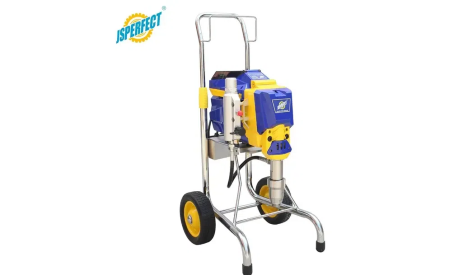
After completing your project, it’s essential to properly clean your airless paint sprayer to maintain its performance. Immediately after use, flush the paint system with water or a solvent to remove any paint residue.
This prevents clogs and ensures that the sprayer will be ready for your next project. Follow the manufacturer's guidelines for cleaning and maintenance, as some sprayers may require additional steps for thorough cleaning.
The spray tip is one of the most crucial parts of your airless sprayer, and it’s essential to keep it clean to avoid clogs and ensure smooth operation. Clean the tip by soaking it in solvent and wiping it with a soft cloth to remove any paint buildup. For stubborn clogs, use a needle or cleaning brush to gently clear the nozzle.
If your paint sprayer is creating drips or runs, it may be due to excessive pressure, spraying too close to the surface, or applying too much paint in one pass. Reduce the pressure, increase the distance between the nozzle and surface, and apply thinner layers of paint.
Uneven coverage is usually the result of inconsistent spray motion, incorrect pressure, or improper nozzle size. Ensure that you maintain a steady motion, adjust the pressure settings, and choose the right spray tip for the paint you are using.
Clogs can occur if the paint is too thick or if the sprayer has not been cleaned properly. To prevent clogs, strain the paint before use and clean the sprayer thoroughly after each use.
Achieving a perfect finish with an airless paint sprayer requires the right preparation, technique, and attention to detail. By following these tips and techniques, you can ensure that your projects—whether they’re residential, commercial, or industrial—will be completed with a smooth, even finish, saving you time and effort.
Properly selecting the right sprayer, preparing the surface, mastering spray techniques, and taking care of your equipment will all contribute to the success of your painting endeavors. Whether you're a professional contractor or a DIY enthusiast, the airless paint sprayer is an essential tool that can elevate the quality of your work.
For high-quality airless paint sprayers and expert advice, Jsperfect provides reliable products designed to meet the needs of both professionals and DIY enthusiasts, ensuring exceptional results every time.


