close
Choose Your Site
Global
Social Media

Views: 0 Author: Site Editor Publish Time: 2026-05-18 Origin: Site
Traditional leveling tools like spirit levels, water tubes, and plumb bobs undeniably built the modern world. However, today's construction margins simply cannot survive the time drains and rework costs associated with manual measurement errors. We view the shift to laser technology not just as an optional equipment upgrade. It represents a critical requirement for maintaining project profitability, meeting strict building compliance standards, and actively mitigating severe industry labor shortages. Tools must work harder. This guide bypasses basic definitions to evaluate proven ROI, direct safety benefits, and strict technical criteria. You will discover how to specify the right laser equipment for your exact needs. Whether you handle heavy commercial site grading or demand precise interior alignment, this breakdown delivers actionable clarity.
Transitioning to laser levels allows single-operator layouts, reducing measurement time by up to 30% and significantly cutting rework costs.
High-visibility lasers and remote operation reduce hazardous ladder-climbing and keep workers out of heavy machinery paths.
From standard rotaries for site grading to the comprehensive 4D laser level for simultaneous multi-plane interior alignment, tool selection must match the specific contractor persona.
True evaluation requires looking past marketing claims to verify ANSI-compliant accuracy (e.g., 1/8-inch per 100 feet) and IP-rated durability.
Manual alignment methods historically drain labor budgets. The traditional 3-4-5 geometric rule guarantees a perfect right angle. However, measuring these points requires physical tape measures. It demands at least two workers. They must pull lines tight and mark floors repeatedly. Water levels present similar delays. They require two operators to handle fluid dynamics across long distances. They consume valuable project hours.
Modern laser tools act as a powerful labor multiplier. A single operator establishes instant reference points. You activate the unit, and it projects an absolute level line. This eliminates the need for a second person to hold a chalk line. You free up skilled crews for higher-value installations. Contractors constantly battle labor shortages. Maximizing the output of every worker becomes essential.
Skeptics often highlight the high initial capital expense of laser equipment. A professional-grade unit costs significantly more than a spirit level. Contrast this expense against the exponential cost of project rework. Tearing down poorly aligned drywall costs thousands of dollars. Fixing an improperly graded concrete slab can bankrupt smaller projects. The laser ensures you build it right the first time.
We see undeniable industry baselines confirming this ROI. Adopting these advanced optical tools directly impacts the bottom line. Consider these quantifiable outcomes:
Layout Time Reduction: Single-operator lasers routinely reduce structural layout time by up to 30%.
Error Mitigation: Automated self-leveling minimizes excavation and installation errors by up to 25%.
Material Savings: Precise cut lines reduce material waste on expensive finishes like tile and custom cabinetry.
Schedule Adherence: Faster layouts keep subsequent trades on schedule, preventing costly timeline delays.
Selecting a laser level requires matching the technology to your exact job site role. Heavy construction demands vastly different equipment than interior finishing. Understanding these workflow mappings prevents costly under-purchasing or over-purchasing.
Heavy construction and grading rely on rotary and pipe lasers. Rotary lasers interface directly with heavy machinery. They project a spinning beam across massive outdoor areas. Display systems mount on excavator cabs. Automated hydraulic grade controls link directly to the laser receiver. This dictates earthmoving precision down to the millimeter. Pipe lasers manage exact gradients for underground drainage. They shoot a precise dot through the pipe center. You prevent costly post-digging corrections.
General and interior contracting utilize cross-line and 360-degree solutions. The progression moves from basic dot lasers to comprehensive multi-line tools. A simple cross-line laser handles basic cabinet installations. However, modern interiors require complex squaring. Drop ceilings, elaborate tiling, and framing demand comprehensive room coverage.
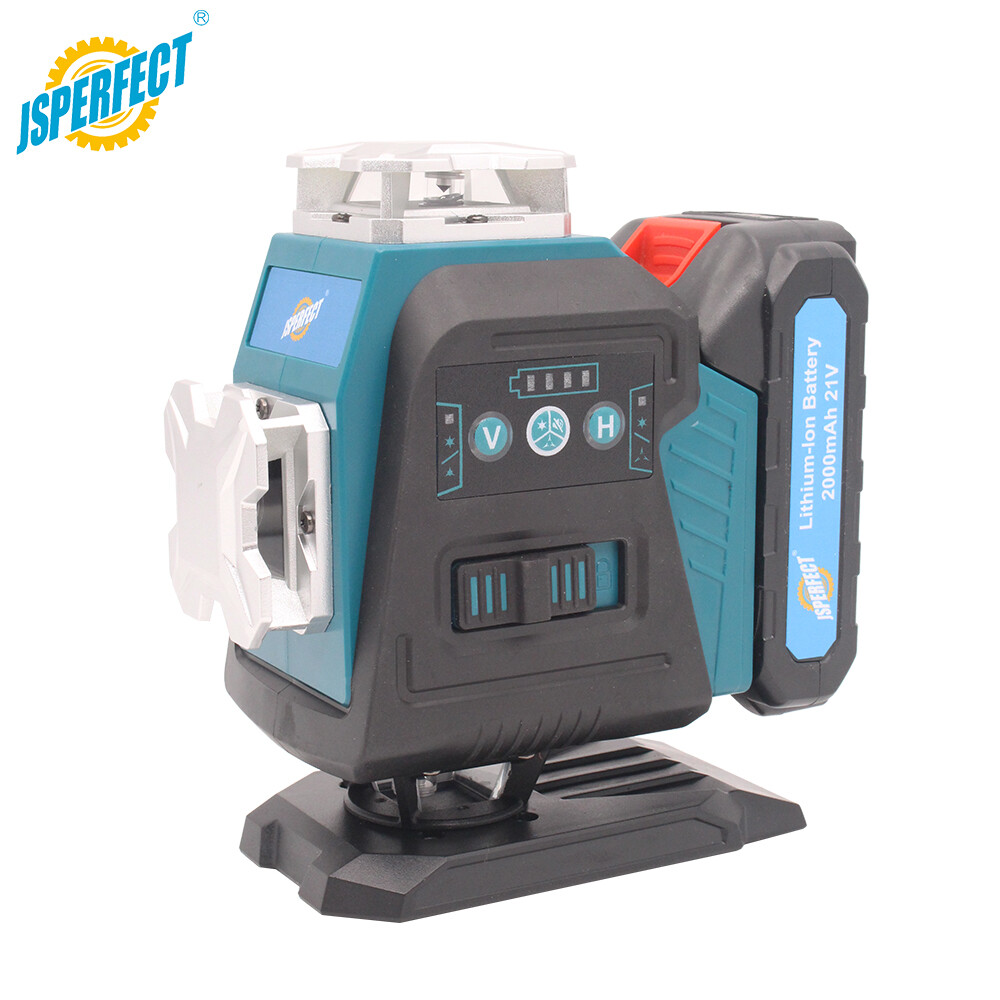
This brings us to the definitive solution for complex interior spaces. The 4D Laser Level provides an unparalleled structural advantage. It projects dual horizontal and dual vertical 360-degree planes. These four distinct planes create intersecting guidelines everywhere. You achieve complete floor-to-ceiling squaring without ever repositioning the unit. It eliminates layout blind spots entirely.
We mapped the core tool categories against specific contractor personas below.
Contractor Persona | Recommended Laser Type | Primary Application |
|---|---|---|
Heavy/Highway Contractors | Rotary Laser (Machine Control) | Earthmoving, automated hydraulic blade control. |
Underground Utilities | Pipe Laser | Drainage gradients, sewer line installations. |
General Contractors | 360-Degree Rotary | Foundation pouring, parking lot grading. |
Interior/Finishing Trades | Drop ceilings, framing, tile squaring. |
Industry conversations usually focus on accuracy and speed. We must elevate the laser level to an Environmental, Health, and Safety (EHS) asset. Precision represents a financial benefit. Safety represents human life and liability mitigation. Laser alignment fundamentally alters how workers navigate a dangerous job site.
Reducing fall hazards remains a paramount safety goal. Manual measuring often requires workers to constantly climb scaffolding or ladders. They must physically check string lines across wide gaps. They balance spirit levels above their heads. High-visibility lasers project clean lines across large distances. Operators simply look at the projected beam from the ground. Less climbing equals fewer catastrophic falls.
Remote operation further distances workers from active dangers. Modern laser units integrate smartphone connectivity. Many feature dedicated remote controls. Operators adjust settings while standing safely away from the active machinery footprint. You keep human bodies out of hazardous drop zones.
We highly recommend implementing these safety protocols when using optical equipment:
Assess the Fall Risk: Set up the laser from the ground level to eliminate ladder usage.
Utilize Remote Adjustments: Connect the device to a smartphone app to tweak line brightness from afar.
Isolate the Machinery Zone: Mount rotary receivers directly on earthmovers so grade checkers stay out of the dirt.
Verify Laser Classifications: Ensure site safety managers log the specific optical class of the equipment.
You must understand laser safety compliance. Differentiate between Class II and Class III lasers. Class II lasers emit visible light. They remain generally safe because the natural human blink reflex prevents eye damage. Class III lasers operate at a much higher power output. They cover massive outdoor distances. They require stricter site isolation and specialized protective eyewear.
Marketing brochures often highlight flashy terminology. True evaluation requires looking past marketing claims. You must verify established technical criteria. A buyer’s framework protects you from purchasing substandard optical instruments. You need verifiable accuracy.
Establish a credible baseline using the ANSI benchmark. Industry standards demand tight tolerances. For high-grade professional tools, look for ±1/8 inch per 100 feet. Metric users should seek ±3 mm at 10 meters. Anything less accurate belongs in a residential DIY toolkit. Commercial projects require this exact ANSI compliance to satisfy structural engineers.
Beware of the vertical accuracy trap. Lower-tier manufacturers often advertise highly impressive horizontal accuracy. They boldly print these numbers on the box. However, they hide poor vertical tolerances deep in the manual. Gravity impacts pendulums differently on vertical axes. Always check both the horizontal and vertical axis specs before buying.
Understand the speed versus coverage paradox. Line and plane lasers provide instantaneous projection. You turn them on, and the line appears. However, they have a limited visible range. Rotary lasers cover massive distances and 360-degree radiuses. Yet, they require milliseconds to sweep the target sensor. You trade instant visibility for maximum distance coverage.
Beam color economics heavily influence your purchase. You must objectively compare standard red beams against green beams. Consider this comparison chart when selecting your diode technology:
Specification | Red Beam Lasers | Green Beam Lasers |
|---|---|---|
Visibility | Standard visibility. Hard to see outdoors. | Up to 4x brighter to the human eye. |
Ideal Environment | Dimly lit residential interiors. | High-ambient light, large commercial floors. |
Battery Drain | Low power consumption. Longer runtime. | High power consumption. Drains batteries faster. |
Price Point | Highly cost-effective. | Requires a premium investment. |
Red beams remain reliable for enclosed interiors. Green beams prove essential for high-ambient light environments. Choose the color that matches your primary working conditions to maximize efficiency.
Choosing a laser level is a strict calculation of labor offset, accuracy compliance, and job site safety. Traditional tools cannot keep pace with modern project timelines. Manual measurements introduce human error and require too many hands. By adopting advanced optical technology, you transform layout tasks from a chaotic guessing game into a predictable, data-driven process.
Take decisive steps for your next procurement cycle. Audit your most common repetitive layout tasks today. Determine your primary lighting environments to choose between red and green diodes. Select a tool format that eliminates your specific bottlenecks. A rotary unit rules the exterior dirt. A modern multi-plane unit dominates the interior finish. Equip your crews with the exact reference tools they need to build faster, safer, and better.
A: While 360-degree lasers typically project one to three continuous planes, a 4D model projects four separate 360-degree planes. These usually consist of two vertical and two horizontal lines. This allows for simultaneous ceiling and floor layout tasks, ultimate squaring, and zero blind spots.
A: We recommend checking calibration before any major project. You should schedule professional factory or service center recalibration every 6 to 12 months. Additionally, you must recalibrate the instrument immediately after a severe drop or job site impact.
A: Yes, conditionally. If working outdoors, in bright ambient light, or over long indoor distances, the 4x visibility improvement justifies the higher price and lower battery life. For tight, dimly lit residential interiors, standard red lasers are completely sufficient.