close
Choose Your Site
Global
Social Media

Views: 0 Author: Site Editor Publish Time: 2026-07-29 Origin: Site
Large-scale painting projects create severe operational bottlenecks. Whether you are tackling whole-house interiors, expansive exterior siding, or multi-deck staining, traditional rolling and brushing simply cannot keep pace with demanding timelines. The manual labor required for these tasks drains energy and extends project durations unnecessarily. Transitioning to high-pressure spraying equipment introduces a new set of challenges. Operators face a distinct tension between achieving a rapid, professional-grade finish and managing the steep learning curve, excessive overspray, and intensive cleanup overhead.
This technical evaluation cuts through standard marketing claims to examine what truly matters in fluid atomization. We analyze pump durability, flow rates, and realistic use-case matching for serious DIYers and contractors. Understanding the mechanical realities of Airless Paint Sprayers ensures you select equipment that aligns with your specific substrate requirements and project volume.
Volume Dictates Viability: Airless paint sprayers are optimal for projects requiring 3+ gallons of material; smaller projects often do not justify the setup and cleanup time.
Flow Rate Over PSI: Gallons Per Minute (GPM) and maximum tip size compatibility are more critical evaluation metrics than peak pressure (PSI) alone.
Adjustability Controls Waste: Variable speed and adjustable pressure controls are critical for minimizing overspray and matching the tool to the substrate.
Hidden Costs of Operation: Consumable spray tips, specialized storage fluids, and a 20-30% increase in paint consumption due to overspray impact the bottom line.
Safety is Non-Negotiable: Operating at 2,000–3,000 PSI introduces severe risks, such as high-pressure fluid injection injuries, requiring strict adherence to safety protocols.
Understanding the mechanics of airless atomization is the first step in determining project suitability. Unlike air-driven High Volume Low Pressure (HVLP) systems that mix paint with a stream of air, airless systems use a motorized pump. This pump forces fluid through a microscopic orifice at extreme pressure. The sheer force rips the paint apart into a fine mist. This mechanical action allows for significantly faster coverage rates. It also provides the distinct advantage of spraying thick, unthinned materials directly from the bucket.
Certain environments heavily favor this high-pressure approach. Exterior siding, extensive perimeter fencing, and new construction drywall are ideal application scenarios. Large, uninterrupted ceilings also benefit immensely from the rapid application rate. In these wide-open spaces, the speed of atomized application vastly outweighs the time spent on equipment setup. When you are staring down 3,000 square feet of bare drywall, a high-output pump will save days of labor compared to a standard 18-inch roller.
The prep-to-spray ratio dictates efficiency for interior spaces. A whole-house repaint warrants the extensive masking, taping, and floor protection required to contain atomized particles. The hours spent masking are quickly recovered once the pump is turned on. Conversely, painting a single occupied room is usually faster using traditional rollers. The time required to tape off windows, doors, and floors, combined with flushing the pump afterward, negates any speed gained during application.
You should actively avoid airless systems for highly detailed work. Fine cabinetry, single-room touch-ups, and intricate trim work suffer under high-pressure application. The equipment lacks the micro-control necessary for delicate surfaces, leading to excessive overspray and potential runs in the finish. For these tasks, HVLP systems or high-quality brushes remain the superior choice.
Selecting the right equipment requires looking past peak pressure ratings. The true capability of a pump lies in its fluid delivery metrics and internal architecture. You need a machine that can keep up with your pace without dropping pressure at the tip.
There is a direct, unbreakable correlation between a pump’s Gallons Per Minute (GPM) rating and the maximum tip size it can support. If a pump cannot generate enough flow to maintain pressure behind a large orifice, the spray pattern will collapse, resulting in heavy tails and uneven coverage. You must match the tip size to the material viscosity.
Material Type | Recommended Tip Size | Required Minimum GPM |
|---|---|---|
Thin Stains & Sealers | .011 - .013 | 0.12 GPM |
Standard Latex Paint | .015 - .017 | 0.24 GPM |
Heavy Exterior Primers | .019 - .021 | 0.34 GPM |
Block Fillers & Elastomerics | .025+ | 0.60+ GPM |
Entry-level units often feature single-speed systems. These run at a constant maximum pressure, which is adequate for basic tasks but limits versatility. Dual-speed and variable electronic pressure controls offer significant advantages. Fine-tuning the pressure output allows operators to dial in the exact force needed to atomize the specific coating. This adaptability prevents bounce-back against the substrate and optimizes the spray pattern, reducing airborne waste.
The internal components dictate the lifespan of the tool. Entry-level models frequently utilize plastic components in the fluid section, which wear quickly under the abrasive nature of latex paints. Professional and high-end DIY models feature stainless steel piston pumps. Replaceable pump cartridges have revolutionized field maintenance. Systems allowing you to swap the entire fluid section in minutes prevent extensive downtime during critical project phases.
Motor design impacts both heat management and operational lifespan. Traditional brushed motors generate more heat and require periodic brush replacement. Brushless DC motors run cooler, last longer, and provide more consistent torque. Brushless motors handle voltage drops much better. This is a vital feature when running the equipment on long extension cords across large job sites.
Mobility relies on hose capacity. A pump rated for a maximum of 50 feet requires you to physically move the unit frequently. Pumps capable of supporting 100 to 150 feet of hose allow you to leave the machine stationary while you navigate scaffolding or multi-story exterior projects. This capacity is directly tied to the motor's power and the pump's ability to maintain pressure over distance.
These units target users tackling seasonal projects, typically spraying 10 to 50 gallons per year. Homeowners prioritize ease of use and lower overspray over raw speed. High Efficiency Airless (HEA) technology defines this category. HEA systems operate at lower pressures, generally around 1,500 PSI. This reduction in pressure softens the spray pattern and can reduce overspray by up to 55% compared to traditional models. Leading models in this space offer excellent affordability and intuitive control. They easily handle unthinned paints and stains directly from the box. They typically support shorter maximum hose lengths and lack the internal power to push heavy elastomeric coatings.
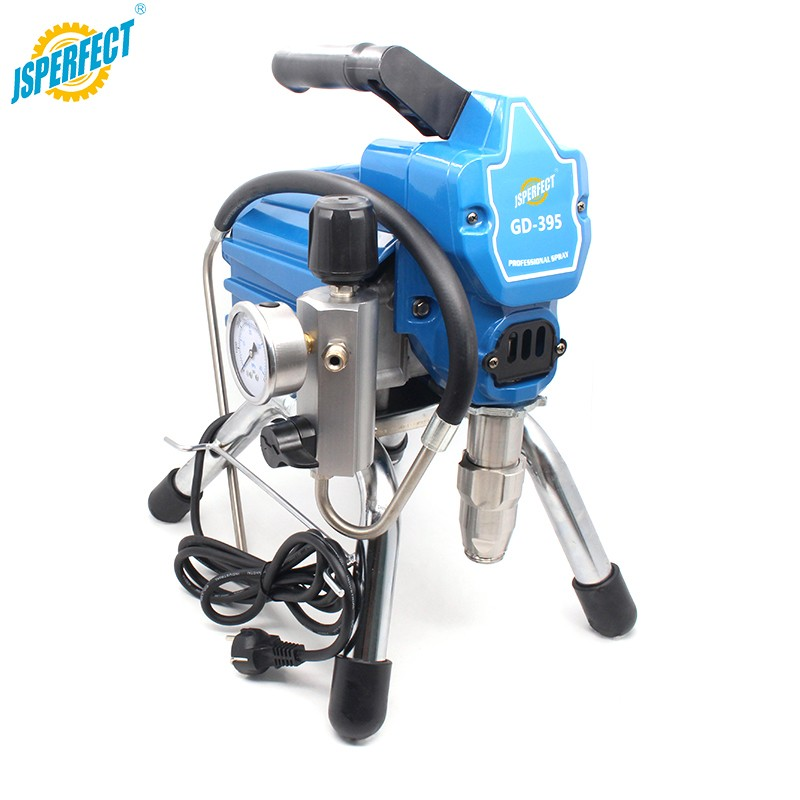
Serious renovators, property managers, and entry-level contractors require robust solutions. Cart-mounted sprayers offer high mobility across rough terrain and the ability to draw material directly from 5-gallon buckets. These standard-bearers feature higher GPM ratings, usually starting around 0.34, and support larger tips in the .017 to .019 range. The robust metal carts withstand physical abuse. High-durability models often include fast-pump replacement mechanisms, ensuring the job continues even if a packing fails. The trade-offs include a heavier, bulkier footprint and the absolute necessity of rigorous maintenance routines to protect the internal metal components.
Agility defines the handheld category. These are built for users needing high-pressure atomization for smaller, multi-location tasks like doors, shutters, or single accent walls. They eliminate the hassle of dragging a hose. Modern iterations integrate lithium-ion battery technology and pressurized cup systems. This allows operators to spray at any angle, even upside down. Professional-grade cordless models offer precise pressure control matching their larger counterparts. Operators face weight fatigue from holding the motor, battery, and paint simultaneously. The limited cup capacity requires frequent refilling, and battery runtimes necessitate having multiple packs on hand.
Efficiency in application speed comes with corresponding material and maintenance realities. Understanding these trade-offs ensures realistic project planning.
Paint waste is an unavoidable reality of high-pressure atomization. While labor time decreases drastically, material consumption increases. Atomized paint particles inevitably drift, lost to the air rather than adhering to the substrate. Operators must factor in a 20-30% increase in paint volume requirements when estimating materials for a sprayed project compared to rolling.
High-pressure fluid acts as an abrasive. Reversible spray tips are consumable items, not permanent fixtures. A standard tip typically maintains a sharp fan pattern for 40 to 50 gallons. Beyond this, the orifice wears out, resulting in a narrower pattern and heavier paint application. Manifold filters and gun filters also require frequent replacement to prevent pressure drops. Throat seal liquids must be applied daily to protect the piston rod from scoring.
Cleanup demands strict adherence to procedure. Flushing the pump, cleaning the gun, and scrubbing the filters takes time. Utilizing garden hose cleaning adapters can expedite the flushing process for water-based materials. Long-term preservation is equally critical. You cannot store a pump with water in the lines. Operators must use specialized storage fluid to protect internal check valves and packings from corrosion or freezing during winter months.
Relieve system pressure completely before starting cleanup.
Remove the spray tip and guard, soaking them in the appropriate solvent.
Flush the pump with water or mineral spirits until the fluid runs clear.
Clean the manifold and gun filters with a soft bristle brush.
Cycle storage fluid through the pump to displace any remaining water.
Operating machinery that pressurizes fluid up to 3,000 PSI introduces significant physical and environmental hazards.
Fluid injection is a severe medical emergency. At 3,000 PSI, paint can easily puncture human skin, injecting toxic materials deep into tissue. This requires immediate surgical intervention. You must mandate the use of tip guards at all times. Engage trigger locks whenever you are not actively spraying. Operators must execute proper pressure-relief procedures before attempting any maintenance, tip changes, or filter cleaning.
Tip clogs disrupt workflow and cause uneven finishes. Mitigation starts with proper paint straining before the intake hose enters the bucket. Utilizing the correct mesh filters in both the manifold and the gun prevents debris from reaching the orifice. When a clog does occur, operators must master the reversible tip clearing mechanism—rotating the tip 180 degrees and firing a short burst into a waste bucket to dislodge the obstruction.
Exterior projects carry the risk of property damage. Wind carries atomized paint significant distances. Extensive masking and heavy drop cloths are mandatory. Operators must actively monitor wind speed and direction. Spraying should be halted during gusty conditions to prevent overspray from settling on neighboring properties, vehicles, or landscaping.
The ideal high-pressure painting equipment depends entirely on your annual gallon usage and the viscosity of your chosen coatings. Matching the machine's capabilities to your realistic workload prevents both underperformance and unnecessary complexity.
Audit your upcoming project's total square footage to accurately estimate the required paint volume, factoring in a 20% overspray margin.
Verify the recommended tip size on your chosen paint's technical data sheet before purchasing any equipment.
Select HEA stand models for occasional deck, fence, or single-room projects where lower overspray is a priority.
Deploy cart-mounted piston pumps for whole-house renovations and exterior siding that require drawing from 5-gallon buckets.
A: Generally, no. Most modern systems generate enough pressure to atomize standard, unthinned latex paints and heavy exterior primers directly from the can. Always check the paint manufacturer's technical data sheet for specific recommendations.
A: Airless systems use a high-pressure piston pump to force fluid through a small tip, ideal for broad surfaces and thick paints. HVLP uses a turbine to mix high volumes of air with low-pressure fluid, perfect for fine finishes on cabinets and furniture.
A: A standard reversible tip typically lasts between 40 and 50 gallons of standard latex paint. Abrasive materials like block fillers will degrade the tip much faster, causing the fan pattern to narrow and apply paint too heavily.
A: Yes. These machines are specifically designed to handle the viscosity of standard interior and exterior latex paints. You just need to ensure you are using the correct tip size, usually between .015 and .017.
A: Strain your paint through a mesh bag before spraying. Ensure your manifold and gun filters match your tip size and are completely clean. Keep the gun moving to prevent material from drying on the tip guard.
A: For standard interior latex paint on walls and ceilings, a .015 or .017 tip is standard. A 515 tip provides an excellent balance of speed and control for broad interior surfaces.