
close
Choose Your Site
Global
Social Media


Views: 0 Author: Site Editor Publish Time: 2026-04-17 Origin: Site


A One-Hand Cordless Saw is a versatile, compact power tool that combines the cutting strength of traditional saws with the flexibility of handheld operation. Popular among DIY enthusiasts, homeowners, and light construction professionals, its cordless design and ergonomic build make it ideal for tasks from home improvements to garden work. With numerous models, battery types, power levels, and blade options available, choosing the right saw can be challenging. Selecting an unsuitable model may reduce efficiency, increase safety risks, or add unnecessary costs. This guide highlights key factors—usage, specifications, ergonomics, and safety—to help you make an informed choice.
Before purchasing a One-Hand Cordless Saw, it is essential to clearly assess your intended use. Understanding the types of tasks you plan to complete and the materials you will work with can significantly narrow down the options and help you select a saw that perfectly matches your needs. This step ensures efficiency, safety, and satisfaction while avoiding unnecessary expenses. The versatility of a One-Hand Cordless Saw makes it suitable for a wide range of applications, but different tasks require different power, blade types, and ergonomics.
For many homeowners, the most frequent use of a One-Hand Cordless Saw is for DIY projects around the house. These tasks can range from simple installations to creative custom projects:
· Installing shelves or cabinets: Cutting boards to size or trimming pieces for a perfect fit is much easier with a compact, single-handed saw. The cordless design allows you to maneuver around existing furniture or appliances without worrying about power outlets.
· Trimming furniture or door frames: Whether resizing a door frame or refining a wooden chair or table, the lightweight construction of a One-Hand Cordless Saw allows precise cuts without requiring a second hand or complex clamping setup.
· Creating custom wooden projects: Small projects, such as building picture frames, storage boxes, or decorative shelving, benefit from the saw’s portability and precision. Working in confined spaces like closets, pantries, or corners is much easier with a tool that can be operated with one hand.
The ergonomics of modern One-Hand Cordless Saws also help reduce fatigue during repetitive tasks. Many homeowners find that even projects that used to require multiple tools can now be handled efficiently with a single saw, thanks to its combination of power, portability, and compact design.
Beyond typical DIY activities, One-Hand Cordless Saws are highly effective for minor renovation and repair projects. Common applications include:
· Adjusting cabinetry to fit new flooring: Cutting base cabinets or trimming countertop edges to match new flooring layouts can be done quickly and accurately. The cordless design allows the saw to be brought directly to the workspace without needing extension cords or heavy equipment.
· Trimming baseboards or molding: Precision is key when working with trim. A single-handed saw with the appropriate blade can make clean cuts without damaging walls or adjacent woodwork.
· Cutting small wooden or plastic panels for home repairs: Whether replacing a damaged panel or making modifications for new installations, the portable saw enables fast, accurate work in tight spaces.
The lightweight and ergonomic design makes it easier to work overhead, in corners, or on uneven surfaces. Many homeowners appreciate that a One-Hand Cordless Saw eliminates the hassle of juggling multiple tools for simple repair tasks.
Outdoor projects also benefit significantly from the versatility of a One-Hand Cordless Saw. Its cordless feature allows flexible movement across uneven terrain, enabling users to work in hard-to-reach areas without worrying about power sources. Some common outdoor uses include:
· Trimming small branches and shrubs: The saw allows quick, clean cuts on branches that are too small for a chainsaw but too thick for manual pruning tools.
· Cutting lightweight wooden beams: Preparing materials for garden furniture, planters, or outdoor structures is easier with a portable saw that can be carried to any location.
· Preparing materials for outdoor furniture: Whether building benches, tables, or small storage units, precise cuts in various angles and lengths are achievable with minimal effort.
Additionally, the safety features built into modern One-Hand Cordless Saws—including blade guards, anti-kickback mechanisms, and safety locks—help ensure secure operation, even on uneven surfaces. This allows outdoor users to work confidently without sacrificing precision or safety.
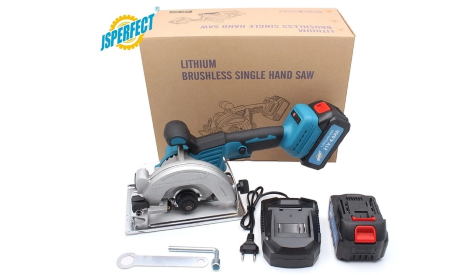
Selecting the right One-Hand Cordless Sawrequires careful attention to its technical specifications. Evaluating these key parameters ensures the saw delivers consistent performance, efficiency, and safety for the tasks you plan to tackle. Understanding the features and capabilities of different models helps you avoid purchasing a tool that is underpowered, overbuilt, or unsuitable for your materials and projects.
Modern One-Hand Cordless Saws almost exclusively use lithium-ion batteries due to their lightweight construction, long lifespan, and efficient power delivery. When choosing a saw, battery performance is one of the most important factors:
· Voltage (V): Higher voltage generally provides more cutting power, making it suitable for harder materials such as dense hardwood or light metals. Lower voltage saws work well for softer materials like pine, MDF, or plastic.
· Capacity (Ah): A higher amp-hour rating extends the working time between charges, which is essential for larger projects. However, a higher-capacity battery can increase the weight of the saw, potentially affecting single-hand operation comfort.
· Charging Time: Some batteries support quick-charging, reducing downtime and allowing more continuous work during long projects.
A saw equipped with the right combination of voltage and battery capacity ensures uninterrupted workflow while maintaining the tool’s portability and ease of use. For most home projects, an 18–20V lithium-ion battery offers a good balance of power and weight.
The cutting efficiency of a One-Hand Cordless Saw is determined by the motor’s power, measured in watts, and its rotations per minute (RPM). Matching power and speed to your material type is essential:
· High-power saws: Ideal for cutting hardwood, thicker boards, and light metals. These saws maintain performance under load and provide smoother cuts in dense materials.
· Medium-power saws: Suitable for softwoods, plastics, and occasional repair or DIY projects. They offer sufficient cutting ability without being excessively heavy.
· Low-power saws: Perfect for small, delicate tasks, such as trimming moldings, cutting thin panels, or working in confined spaces.
Maintaining a consistent RPM is critical to achieving clean, accurate cuts. Inconsistent speed can cause blade binding, rough edges, or even damage to the material being cut.
The type and quality of the blade significantly affect cut precision and overall user experience:
· Material-specific blades: Different materials require specific blade designs. Wood blades have larger teeth for fast, rough cuts, while plastic or metal blades have finer teeth for smooth, precise edges.
· Quick-change systems: Modern saws often include tool-free blade replacement mechanisms, making it safer and faster to swap blades between tasks.
· Durability: High-quality blades maintain sharpness longer, reduce vibration, and improve cutting accuracy, which is especially important for intricate or repetitive tasks.
By carefully considering battery type, power and speed, and blade quality, you can select a One-Hand Cordless Saw that meets your project requirements and ensures a safe, efficient, and enjoyable cutting experience.
Comfort and safety are essential considerations when selecting a One-Hand Cordless Saw, especially for extended use or projects in tight spaces. A saw that feels awkward or lacks proper safety features can lead to fatigue, reduced precision, or even accidents.
The handle of a One-Hand Cordless Saw plays a critical role in overall comfort and control. Proper weight distribution ensures the saw feels balanced, reducing strain on the wrist and forearm during single-hand operation. This is particularly important when working overhead, in corners, or on uneven surfaces. Grip comfort is equally important—non-slip, textured grips improve handling, allow better control over the blade, and reduce hand fatigue during prolonged use. Ergonomic handles make repetitive cutting tasks easier and safer, allowing users to work with confidence and precision.
Modern cordless saws come equipped with multiple safety features to prevent accidents. A protective guard shields the user from direct contact with the blade while cutting. A safety lock ensures that the saw cannot be accidentally activated, reducing the risk of unintentional injuries. Additionally, an anti-kickback mechanism prevents sudden, uncontrolled blade movement, which can occur if the saw binds in the material. These features not only enhance safety but also provide peace of mind, allowing users to focus on precision and efficiency rather than worrying about potential hazards.
By prioritizing ergonomics and safety, a One-Hand Cordless Saw becomes a tool that is both comfortable to use and reliable, making it suitable for a wide range of DIY, repair, and light construction tasks.
When choosing a One-Hand Cordless Saw, keep these points in mind:
Recommendation Area |
Details |
Motor Power, Blade & Battery |
Match motor power, blade type, and battery capacity to your task requirements. |
Handle Design & Weight |
Ensure the handle is comfortable and the weight is balanced for single-hand operation. |
Safety Features |
Check for guards, safety locks, and anti-kickback mechanisms to ensure safe use. |
Checklist |
Prepare a list of key parameters to avoid purchasing a tool that does not meet your needs. |
Choosing the right One-Hand Cordless Saw starts with understanding your projects, the materials you’ll work with, and your personal preferences. Key factors to consider include ergonomics, motor power, blade type, battery capacity, and safety features, all of which ensure efficiency, comfort, and reliable performance. By carefully evaluating these aspects, you can select a saw that meets your needs for DIY, light construction, and repair tasks. For more detailed specifications, expert guidance, and professional recommendations, visit Jsperfect, where you can explore their full range of tools or contact their team to find the perfect saw for your projects.
1. What type of blade is recommended for plastics?
o Use fine-tooth blades specifically designed for smooth plastic cuts.
2. How long does a lithium-ion battery last per charge?
o Most batteries last 30–60 minutes of continuous cutting, depending on power and load.
3. Is a brushless motor worth the extra cost?
o Yes, brushless motors offer higher efficiency, longer lifespan, and lower maintenance.
4. Can a One-Hand Cordless Saw handle light metals?
o Yes, with the proper blade and sufficient motor power, it can cut light metals like aluminum sheets.
