
close
Choose Your Site
Global
Social Media

Views: 0 Author: Site Editor Publish Time: 2026-04-15 Origin: Site
A One-Hand Cordless Saw is a lightweight, versatile tool that combines the cutting power of a traditional saw with handheld flexibility. Increasingly popular among DIY enthusiasts and homeowners, it offers portability, compact design, and cordless convenience for small-scale or occasional tasks. Before purchasing, consider its ease of use, cost, and practical applications.
A One-Hand Cordless Saw offers several significant advantages that make it an essential tool for both DIY enthusiasts and homeowners. Its combination of portability, cordless operation, and compact design sets it apart from traditional saws, providing convenience and efficiency in a wide range of tasks.
One of the most notable benefits of a One-Hand Cordless Saw is its portability and the flexibility it provides during operation. Unlike traditional saws, which often require two hands and a stable workbench, this type of saw is designed for single-handed use. Its lightweight construction allows users to maneuver the tool easily, making it perfect for cutting in tight or confined spaces. For example, tasks such as trimming molding, cutting small wooden boards, or adjusting furniture components are much easier with a handheld design. This flexibility also makes it possible to work in areas where larger saws are impractical, such as inside cupboards, closets, or narrow hallways.
Furthermore, the ergonomic design of a One-Hand Cordless Saw reduces user fatigue. The balanced weight distribution and comfortable grip allow for longer periods of work without discomfort. For DIY enthusiasts who often work on multiple small projects in one day, this feature ensures efficiency without sacrificing precision or control.
Another major advantage of a One-Hand Cordless Saw is its cordless nature. Without the limitations of power cords, users can move freely around the workspace, whether indoors or outdoors. This is particularly useful for projects where access to electrical outlets is limited, such as in the backyard, garage, or during outdoor construction tasks.
The cordless design also enhances safety by eliminating tripping hazards caused by dangling cords. Additionally, modern cordless saws often feature high-capacity lithium-ion batteries, which provide sufficient power for most light to medium tasks while maintaining consistent performance throughout the cutting process.
Compared to traditional saws, a One-Hand Cordless Saw is much more compact and easier to store. Its small size allows it to fit conveniently in utility closets, workshop drawers, or even toolboxes. For homeowners with limited storage space, this advantage cannot be overstated. The compact design also simplifies transportation, making it easy to carry the saw between different job sites or projects.
Moreover, because a One-Hand Cordless Saw does not require a dedicated workspace or stand, it reduces clutter and frees up room for other tools and materials. This makes it ideal for small workshops or home offices where space is at a premium.
Despite the many benefits, a One-Hand Cordless Saw does come with some limitations that should be considered before purchase:
Most cordless saws run on rechargeable batteries, which means long-duration cutting tasks may require spare batteries or frequent recharging. While this is sufficient for light DIY projects, it can be a limitation for larger or continuous work sessions.
Compared to professional or corded power saws, a One-Hand Cordless Saw usually delivers lower cutting power. It is designed for light to medium tasks, such as cutting softwood, plastic, or thin metal. Heavy-duty tasks like cutting thick hardwood or large boards may exceed its capabilities.
Because of its smaller motor and lower torque, a One-Hand Cordless Saw may struggle with thicker or harder materials. Attempting to cut very dense wood or metal may reduce cutting efficiency and place additional strain on the tool.
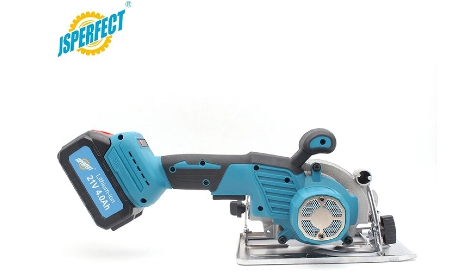
When choosing a one-hand cordless saw, understanding the technical parameters is crucial for selecting the tool that best fits your needs. Below is a comparison between the JSPERFECT CCSC and a popular example model, the Makita XSC050.
Feature / Model | JSPERFECT CCSC | Makita XSC050 (Example) |
Blade Diameter (mm) | 140 | 150 |
No-Load Speed (r/min) | 6000 | 5000 |
Cutting Capacity (mm) | 35–50 | 40–55 |
Rated Voltage (V) | 21 | 18 |
Battery Capacity (mAh) | 4000 | 3000 |
Motor Type | Brushless | Brushless |
Battery Type | Makita Type | Makita Original |
Weight (kg) | ~2.2 | ~2.5 |
Recommended Tasks | Small to medium wood, DIY projects, indoor/outdoor tasks | Medium to large wood, home renovation, woodworking projects |
Accessories | Color box + 2 batteries | Standard kit (1 battery, charger) |
1. Blade and Cutting Capacity
1. The JSPERFECT CCSC comes with a 140 mm blade suitable for precise cutting of small to medium wood. Its cutting capacity of 35–50 mm covers most DIY tasks.
2. Makita XSC050 has a slightly larger 150 mm blade, with a cutting range of 40–55 mm, making it more suitable for heavier woodworking projects.
2. Speed and Power
1. JSPERFECT achieves a faster no-load speed of 6000 r/min, which can result in cleaner, quicker cuts on softer materials.
2. Makita’s 5000 r/min is slightly slower but offers more torque, ideal for denser materials.
3. Battery and Voltage
1. JSPERFECT uses a 21V, 4000 mAh battery, providing longer runtime, especially with two batteries included.
2. Makita’s 18V battery is slightly lower in capacity but pairs with a well-optimized brushless motor for efficient power management.
4. Weight and Portability
1. JSPERFECT CCSC is lighter (~2.2 kg) than Makita (~2.5 kg), making it easier to handle for prolonged periods or one-handed use.
5. Use Cases
1. JSPERFECT excels in DIY projects, indoor tasks, and small-medium woodwork due to its lightweight and higher speed.
2. Makita is better suited for professional woodworking or home renovation where slightly larger cutting capacity and torque are required.
6. Accessories and Convenience
1. JSPERFECT includes a color box and two batteries, allowing uninterrupted work.
2. Makita comes with a standard kit, which may require purchasing extra batteries separately for extended work.
A One-Hand Cordless Saw proves to be an exceptionally versatile tool across a variety of practical scenarios, making it highly valuable for both homeowners and DIY enthusiasts. Its compact design, lightweight build, and cordless convenience allow users to complete tasks that would otherwise require cumbersome equipment or multiple tools.
One of the most common applications of a One-Hand Cordless Saw is in home DIY projects. Whether you are assembling furniture, installing shelves, or performing trim work, the saw provides precision and ease of use. Its ability to operate with a single hand allows for quick adjustments and cuts in tight spaces, such as inside closets, cabinets, or narrow hallways. For example, cutting small wooden boards for a custom bookshelf or trimming door frames can be completed efficiently without the need for a large workshop setup.
In addition to DIY tasks, a One-Hand Cordless Saw is highly effective for light renovation and repair projects. Homeowners can use it to modify furniture, repair cabinetry, or make small adjustments to wooden structures. Its portability means it can be brought directly to the workspace without the hassle of dragging heavy saws or extension cords. The cordless feature is particularly useful for quick fixes, such as resizing a piece of plywood for a temporary wall or trimming a baseboard to fit a new flooring layout.
Beyond indoor projects, a One-Hand Cordless Saw is also useful for occasional outdoor tasks. Small woodworking projects in the garden, cutting branches for landscaping, or preparing wood for outdoor furniture are all made easier with this tool. Its lightweight design and cordless operation allow users to maneuver it comfortably over uneven terrain, ensuring precise cuts even when working away from power outlets.
Overall, a One-Hand Cordless Saw offers unmatched convenience and versatility for a range of practical scenarios. Its combination of portability, ease of handling, and cordless operation makes it an ideal choice for home DIY, light renovation projects, and occasional outdoor tasks, helping users save time and effort while maintaining precision.
Deciding whether a One-Hand Cordless Saw is worth buying depends on your specific needs, budget, and preference for portability. For home DIY projects and light cutting tasks, this tool is highly valuable, saving time, enhancing precision, and offering convenience that traditional saws cannot match. While it may not be suitable as a primary tool for heavy-duty construction or extended continuous use, it can still serve as a handy supplementary device. If your projects involve light to medium cutting and portability matters, a One-Hand Cordless Saw is a smart investment. For more detailed specifications, expert advice, and professional guidance, visit Jsperfect, where you can explore their product range or contact their team for personalized recommendations.
1. Q: Is a One-Hand Cordless Saw better than a traditional power saw?
A: It depends on your task. For portable, lightweight work, a One-Hand Cordless Saw excels. For heavy-duty cutting, a traditional saw is still necessary.
2. Q: Will the battery life last long enough for most projects?
A: For typical home and light DIY projects, yes. For longer, continuous tasks, having a spare battery is recommended.
3. Q: Is it suitable for occasional users?
A: Absolutely. Its compact design and ease of use make it ideal for homeowners or hobbyists who need a versatile tool without heavy investment.
4. Q: Do brand differences matter?
A: Yes. Different brands vary in battery performance, motor power, blade quality, and after-sales service. Reliable brands often provide longer-lasting tools and better warranties.


